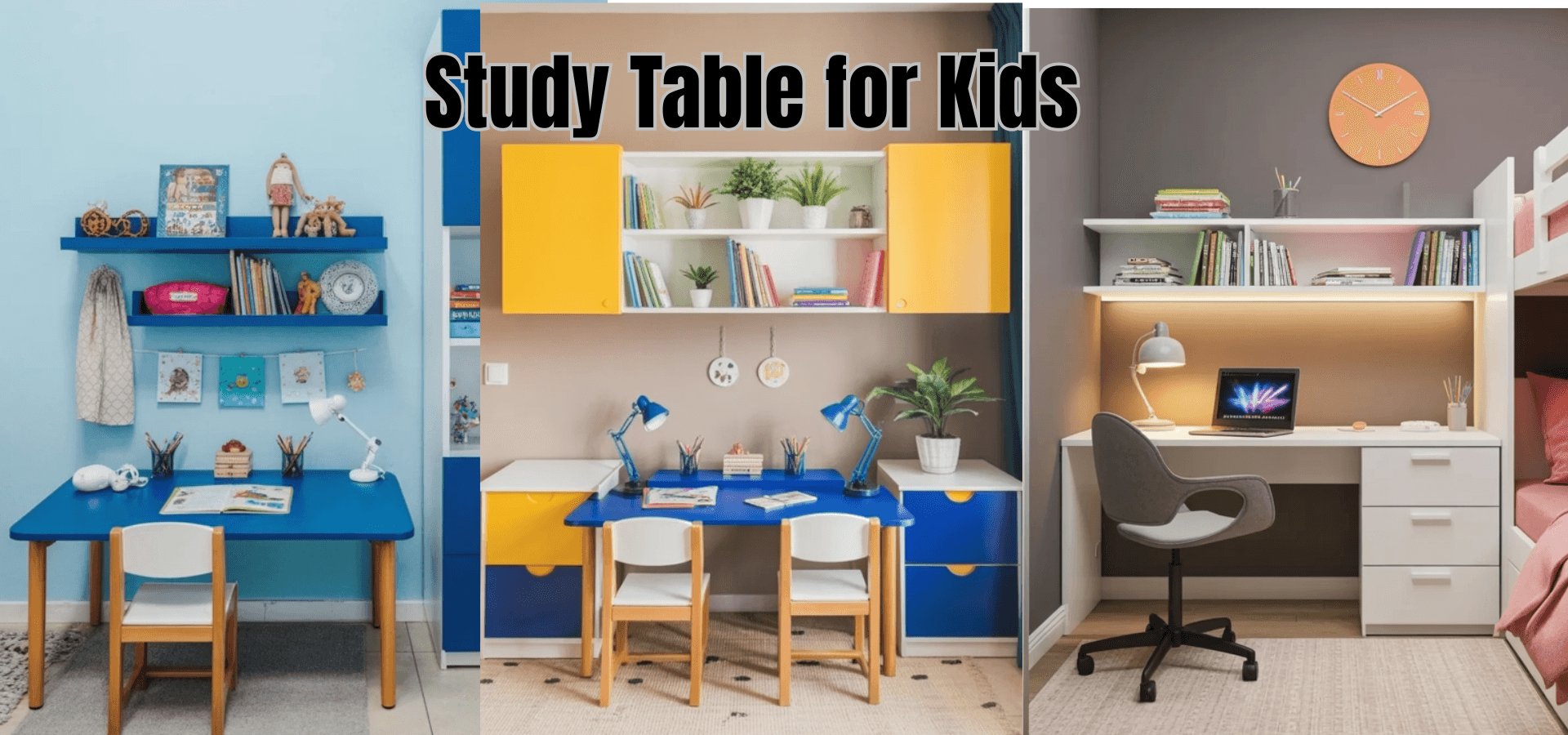
No more excuses for unfinished homework. The right study table for kids can quietly shape better habits, stronger focus, and a healthier learning routine. From posture and concentration to creativity and confidence, a thoughtfully designed study table does far more than just hold books.
At Wudbell, we believe children thrive when their environment is designed for them, not adjusted as an afterthought. Whether your child is beginning school or spending long hours studying, this guide will help you choose a kids’ study table design that supports learning today and adapts for tomorrow.
Why Choosing the Right Study Table Matters
Picture a child trying to study on a table that is too tall, with a chair that doesn’t support their back and books scattered across the room. Discomfort sets in quickly, and focus disappears even faster.
Now imagine a different scenario: a study table for kids designed to their height, with storage within reach, good lighting, and a layout that’s inviting rather than restrictive. The child sits longer, concentrates better, and begins to associate the space with productivity.
That is the real impact of a well-planned study setup.
Tip #1: Give Them Enough Creative Space
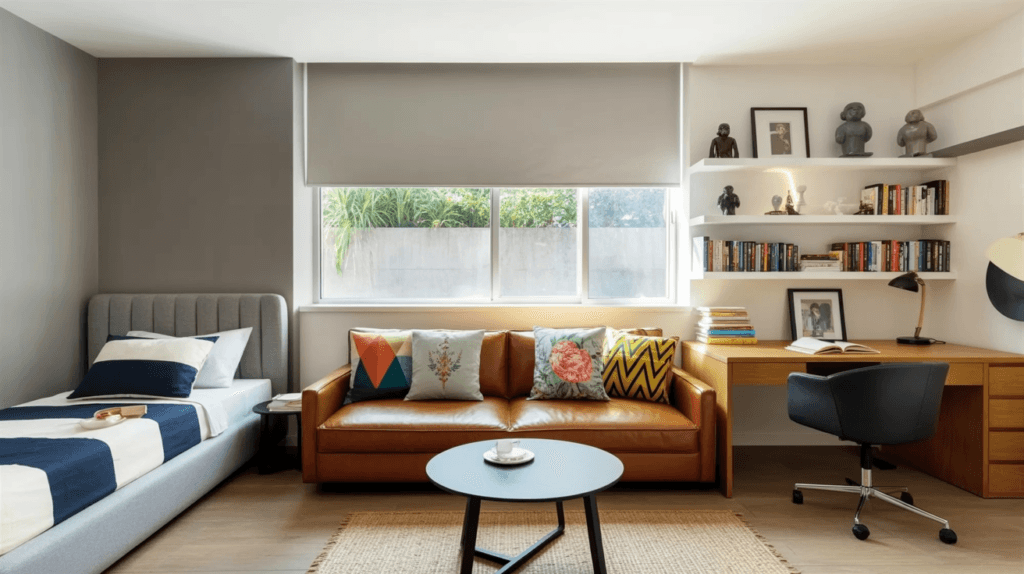
Space is one of the most overlooked aspects of a study table design for kids.
Children rarely work on just one thing at a time. Books, notebooks, pencils, colours, craft supplies, and sometimes even toys end up on the table. A cramped surface quickly becomes frustrating.
How to choose the right size:
- For short homework sessions or reading, a compact table may work
- For creative tasks, projects, or exams, a wider tabletop is essential
Practical Takeaway
Always plan slightly bigger than current needs. Children grow, and their academic requirements expand faster than expected.
Tip #2: Make Sure There’s Adequate Storage
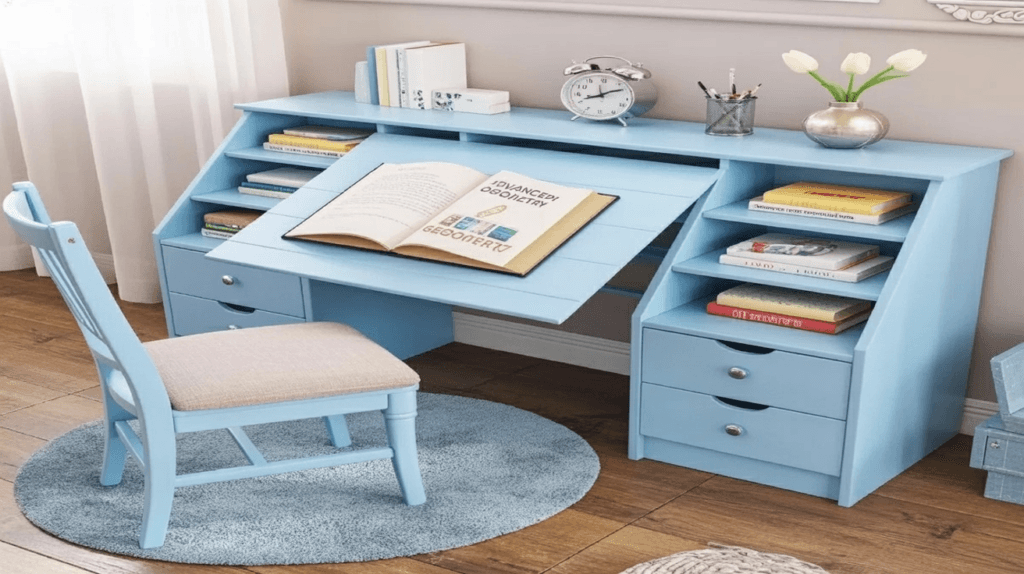
A cluttered desk leads to a cluttered mind.
A study table with storage allows children to keep everything they need in one place, reducing interruptions and improving focus.
Useful storage features include:
- Drawers for stationery
- Open cubbyholes for books
- Built-in shelves
- Small cabinets for art supplies
When children don’t have to leave their seat repeatedly to fetch items, they stay engaged for longer.
Pro Tip
Ensure drawers and shelves are easy to reach. Independent access helps children build responsibility and organisational habits early.
Tip #3: Choose Study Tables Designed Specifically for Kids
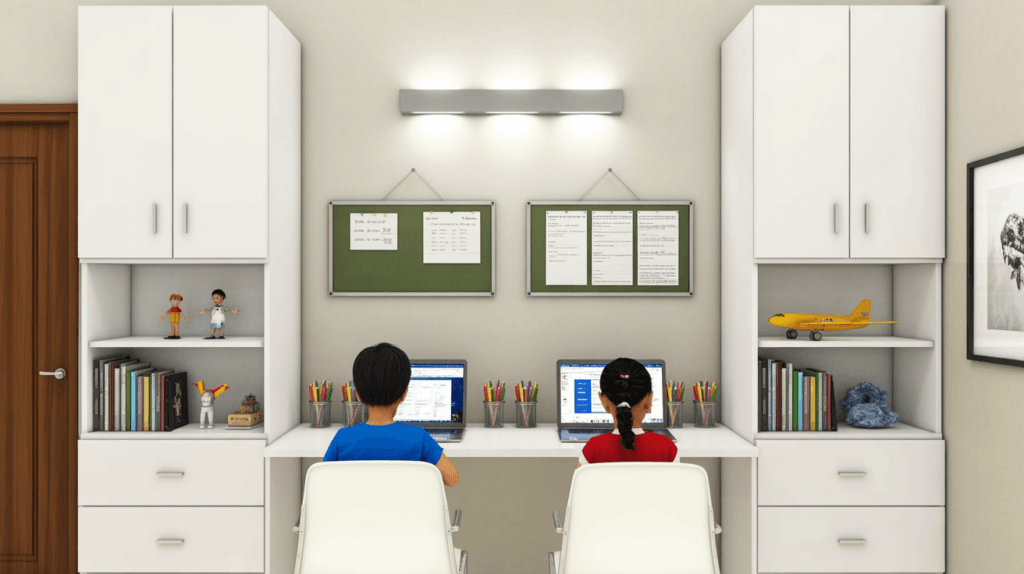
Using an adult-sized desk for children might seem convenient, but it often causes long-term discomfort.
A study table for students is designed with correct proportions for a child’s height, arm reach, and posture. This helps prevent slouching, neck strain, and poor sitting habits.
Over time, ergonomic furniture supports:
- Better posture
- Improved concentration
- Reduced fatigue during long study hours
Key Insight
Investing in a child-specific study table now can prevent posture-related issues later.
Tip #4: The Chair Must Match the Table
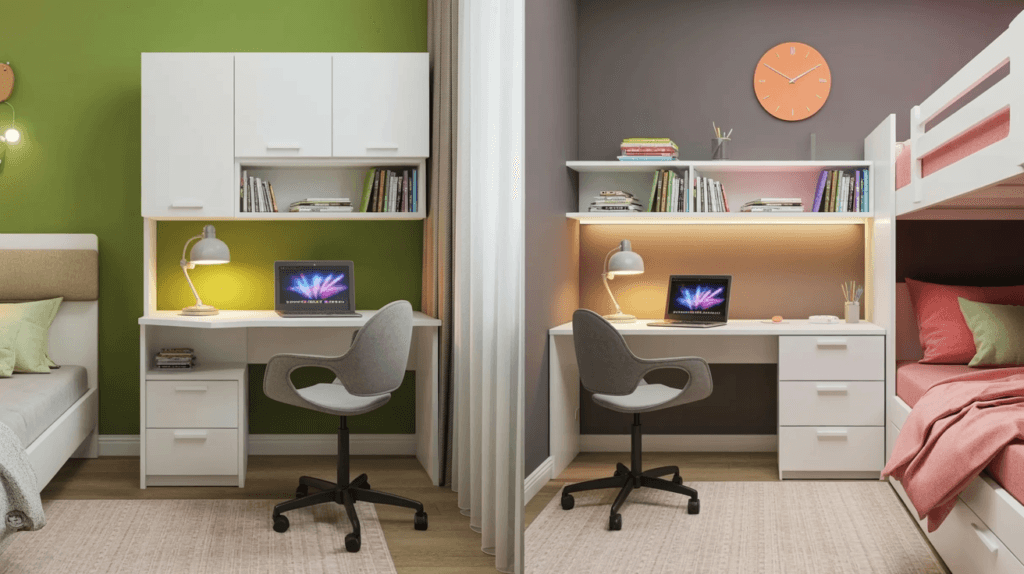
A study table is only as good as the chair paired with it.
If the chair is too high, too low, or lacks back support, your child will constantly shift position, lose focus, and feel tired quickly.
What to look for:
- Proper seat height aligned with the table
- Comfortable back support
- Stable construction
Choosing a study table with chair for kids ensures visual harmony and ergonomic compatibility.
Actionable Advice
Always test the table and chair together. The child’s elbows should rest comfortably on the table without raising shoulders.
Tip #5: Use Colours That Stimulate Learning
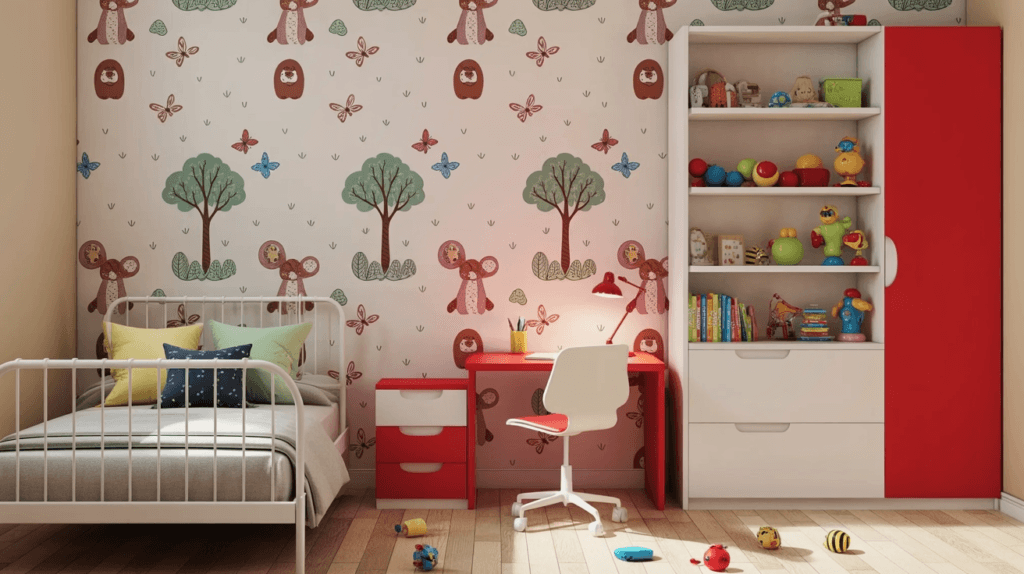
Colours influence mood, energy levels, and focus, especially in children.
- Warm colours like orange and yellow encourage enthusiasm and creativity
- Cool colours like blue and green promote calmness and concentration
- Neutral shades work well for easily distracted children
A thoughtfully coloured kids’ study table design can subtly improve attention without overwhelming the room.
Design Tip
Balance bright furniture with neutral walls, or neutral furniture with colourful accessories.
Tip #6: Prefer Open Shelving Over Closed Cabinets
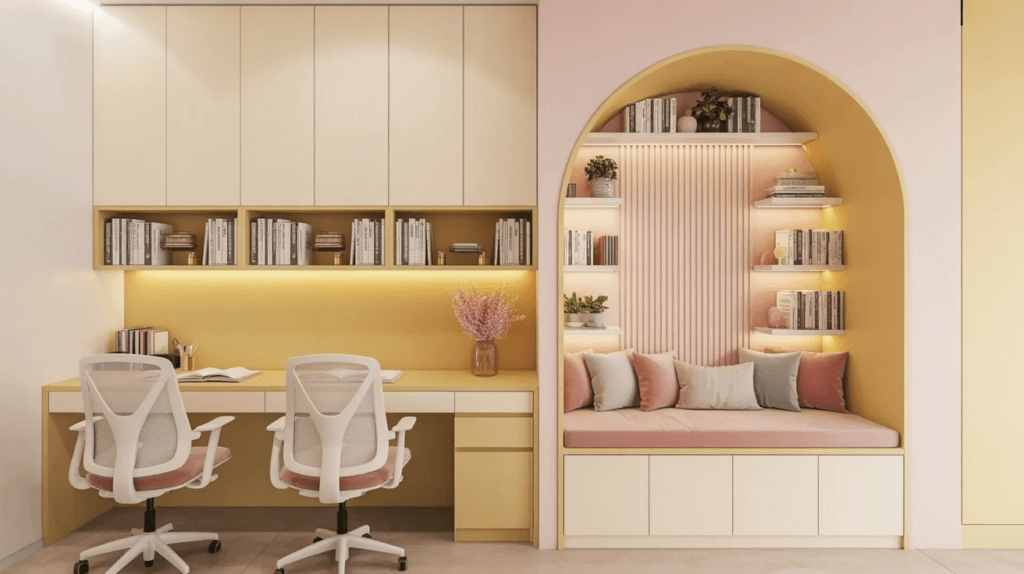
Open shelves make organisation simple and visible.
Children can see where things belong, which makes tidying up less of a task. Open storage also allows kids to display books, artwork, or achievements, making the study area feel personal.
Practical Benefit
Open shelves encourage creativity and reduce dependency on adults for accessing everyday items.
Tip #7: Ensure Proper Lighting Around the Study Table
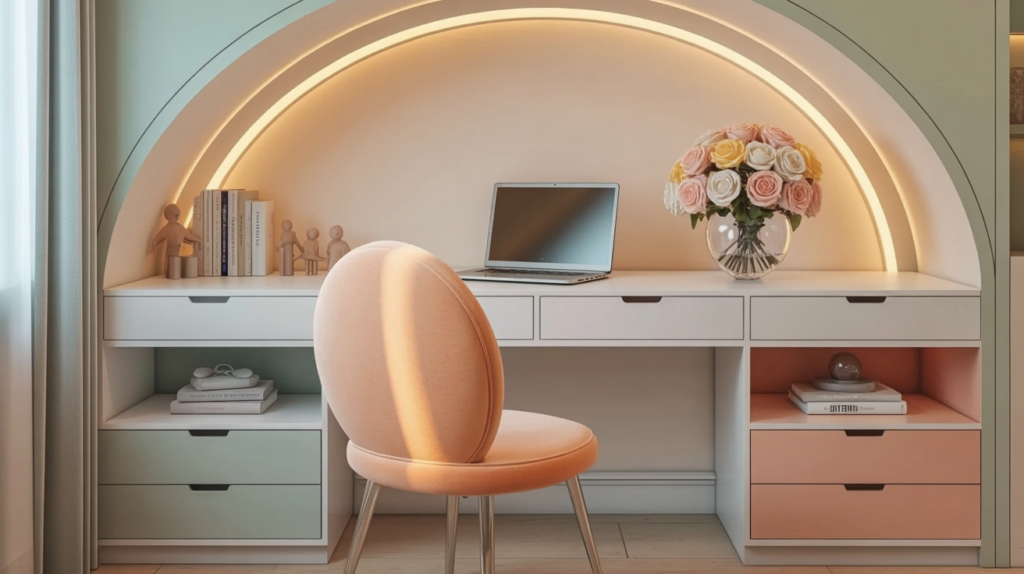
Lighting plays a major role in visual comfort and concentration.
Poor lighting can cause:
- Eye strain
- Headaches
- Reduced focus
Best lighting options include:
- Natural daylight near windows
- Adjustable table lamps
- Soft LED strip lighting under shelves
Pro Tip
Avoid harsh white light. Neutral or warm lighting is more comfortable for extended study sessions.
Pro Tip: Always Try Before You Buy
A study table for kids should fit your child, not just the room.
Before finalising:
- Let your child sit at the table
- Ask them to read or write for a few minutes
- Observe posture, comfort, and reach
This small step can prevent long-term discomfort and regret.
12 Unique Kids’ Study Table Design Ideas
Creative layouts help children feel motivated and independent. Here are practical, space-efficient kids’ study table designs that work beautifully in modern homes:
1. Study Table with Chair for Two Kids
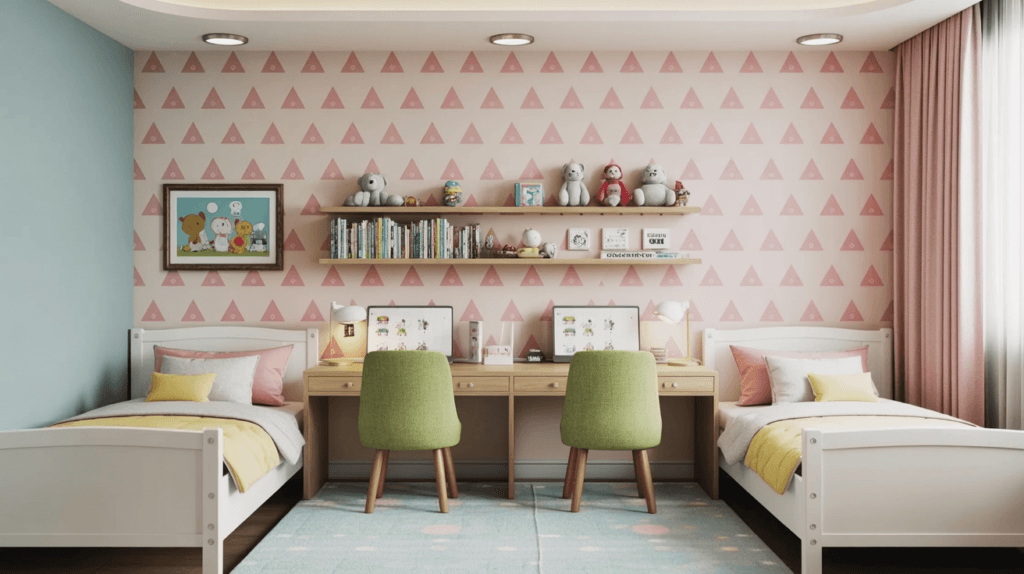
Ideal for siblings sharing a room. Depending on their study habits, tables can be placed together or apart to minimise distractions.
2. Under-the-Bed Study Table
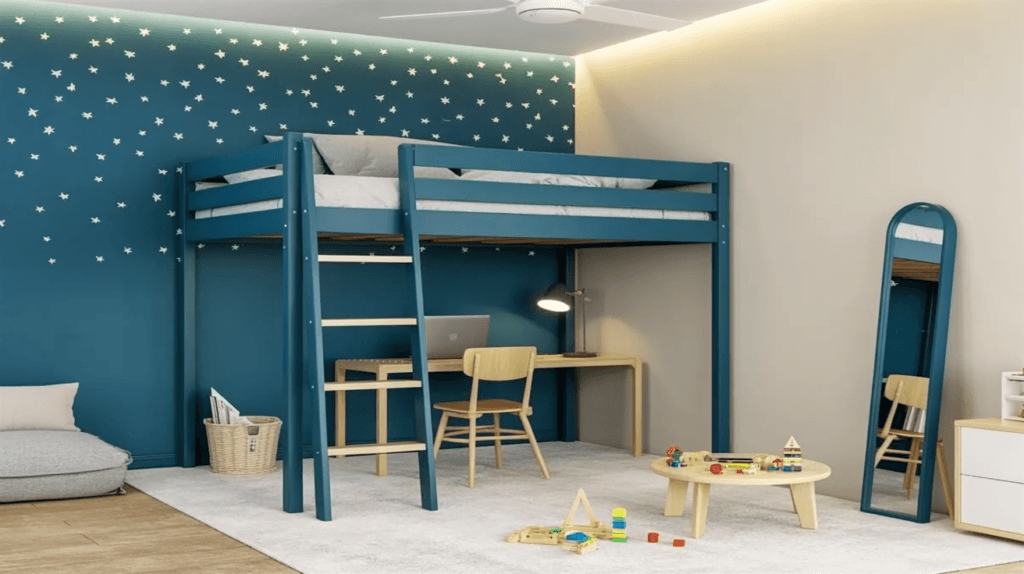
A space-saving solution that leaves more room for movement and play while still offering adequate storage and surface area.
3. Portable Study Table for Kids
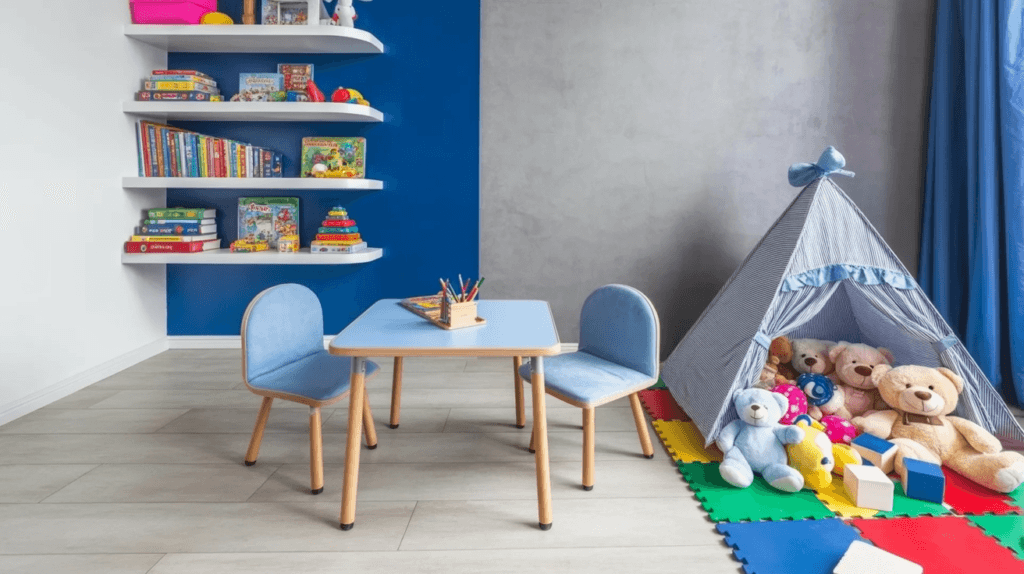
Perfect for younger children who enjoy changing their environment. Portable tables allow flexibility and help parents understand comfort preferences.
4. Foldable Study Table
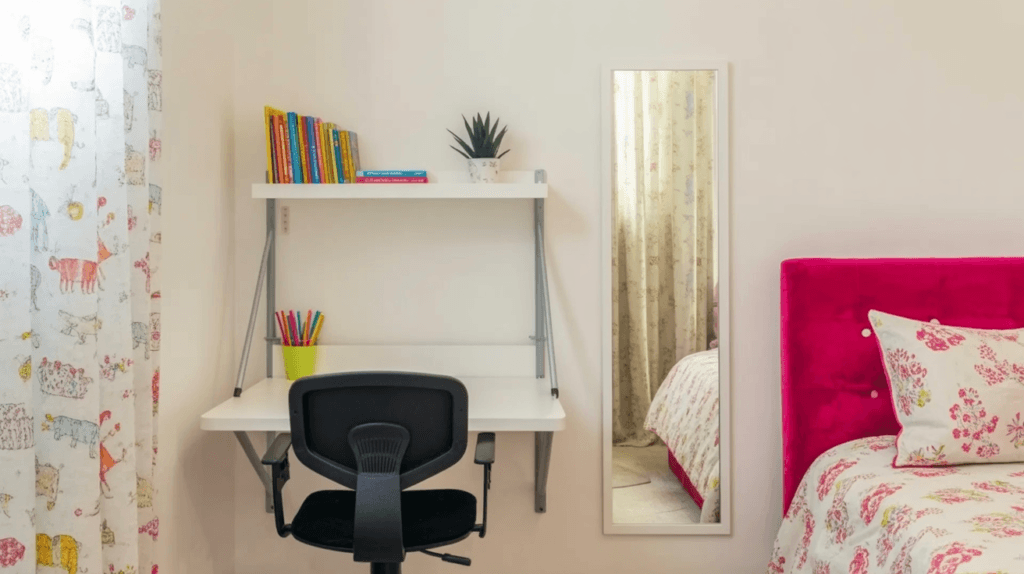
Designed for compact bedrooms, foldable study tables can be closed when not in use, keeping the room clutter-free.
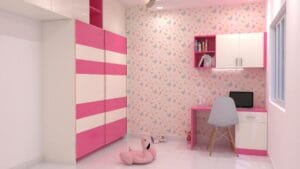
5. Wardrobe-Cum-Study Table Design
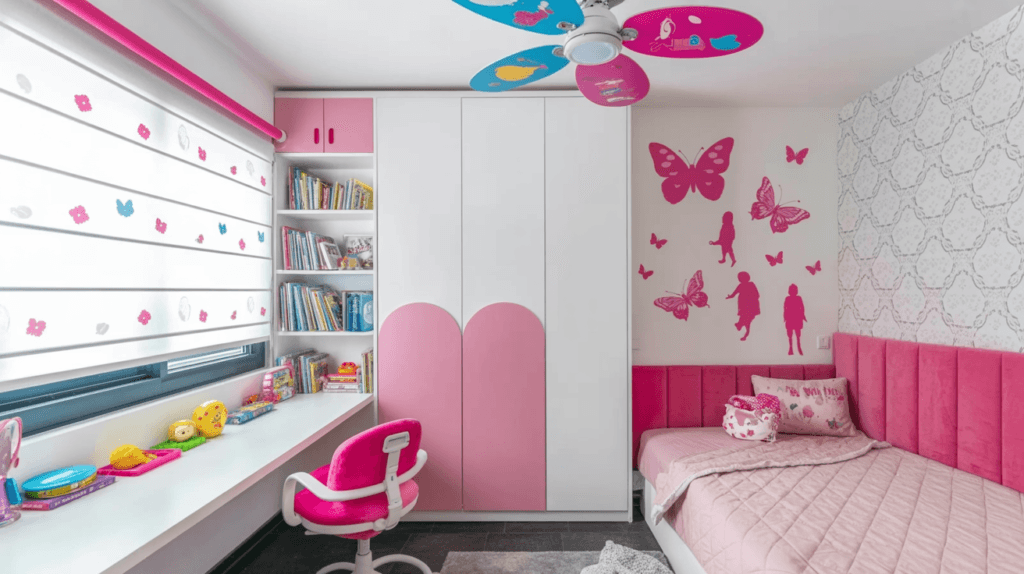
Combining the wardrobe and study table into one unit optimises space and creates a cleaner layout, especially in smaller rooms.
6. Partitioned Wall Study Table with Drawers
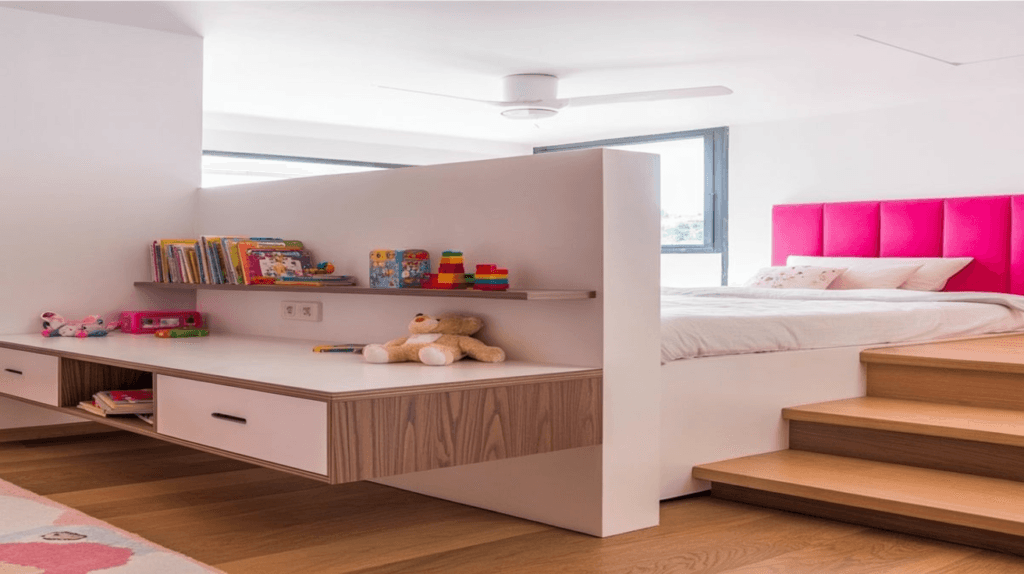
This design separates the study and sleeping areas, helping children mentally switch into study mode.
7. Floating Kids’ Study Table
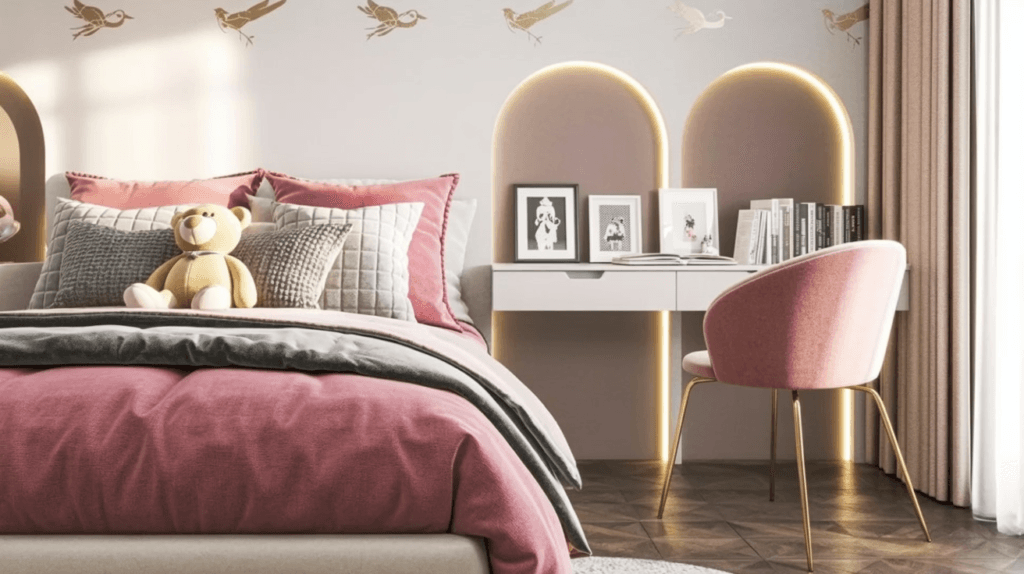
Wall-mounted tables keep the floor clear, making rooms feel larger and easier to clean. Some designs also allow height adjustment as the child grows.
8. Study Table with Pegboard
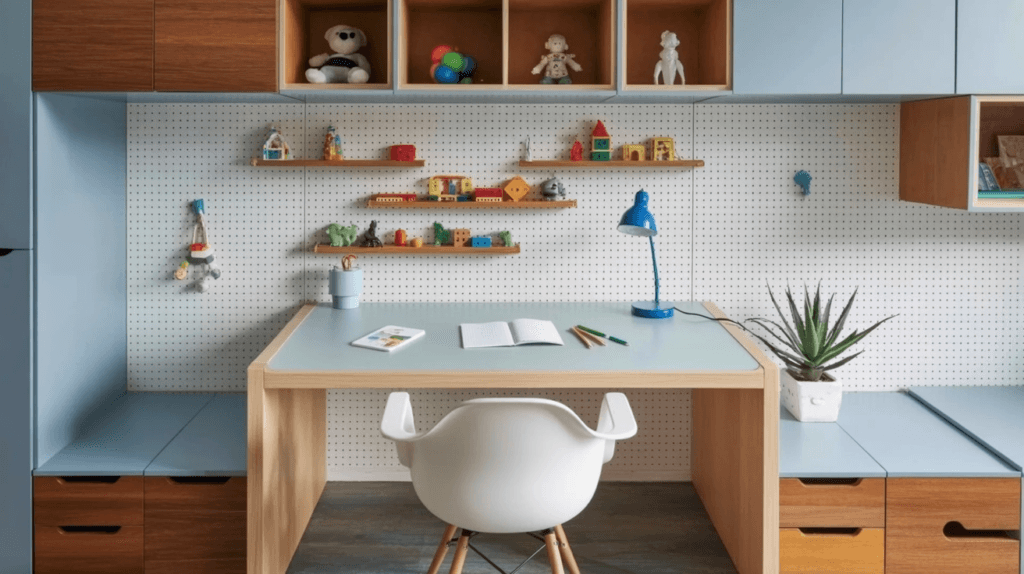
Pegboards use vertical space efficiently and keep stationery and art supplies easily accessible while freeing up the tabletop.
9. Wooden Study Table for Kids
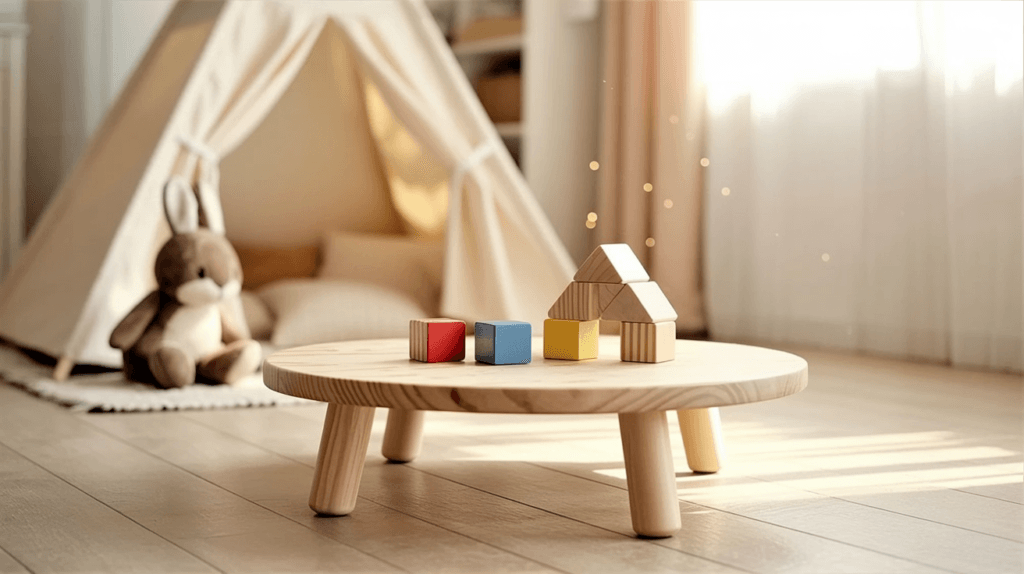
Wooden tables are durable, long-lasting, and easy to customise with paint or finishes as your child grows.
10. Study Table with Storage
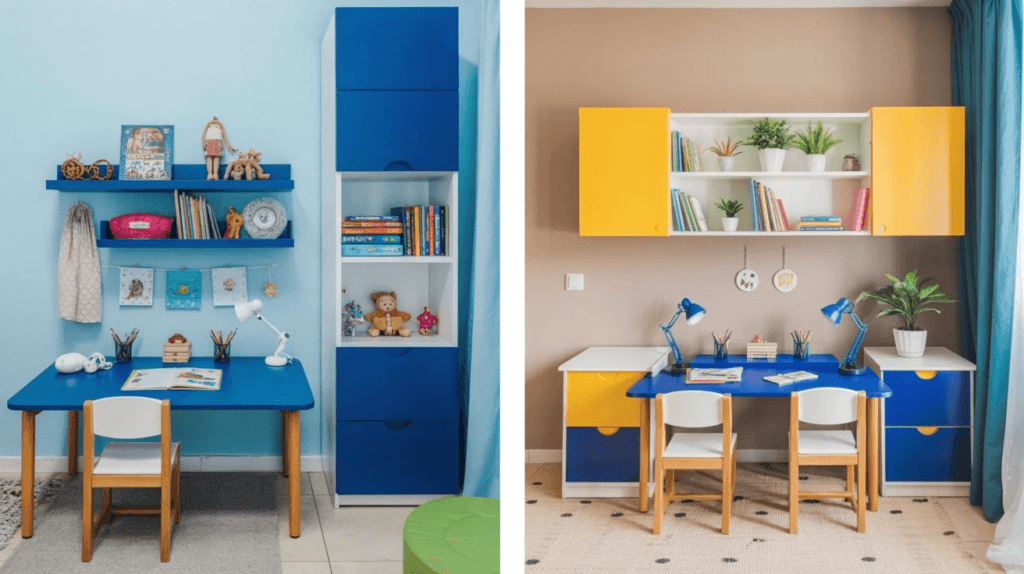
Designed for little hands, these tables help children stay organised and focused by keeping essentials within reach.
11. Toddler Table Design
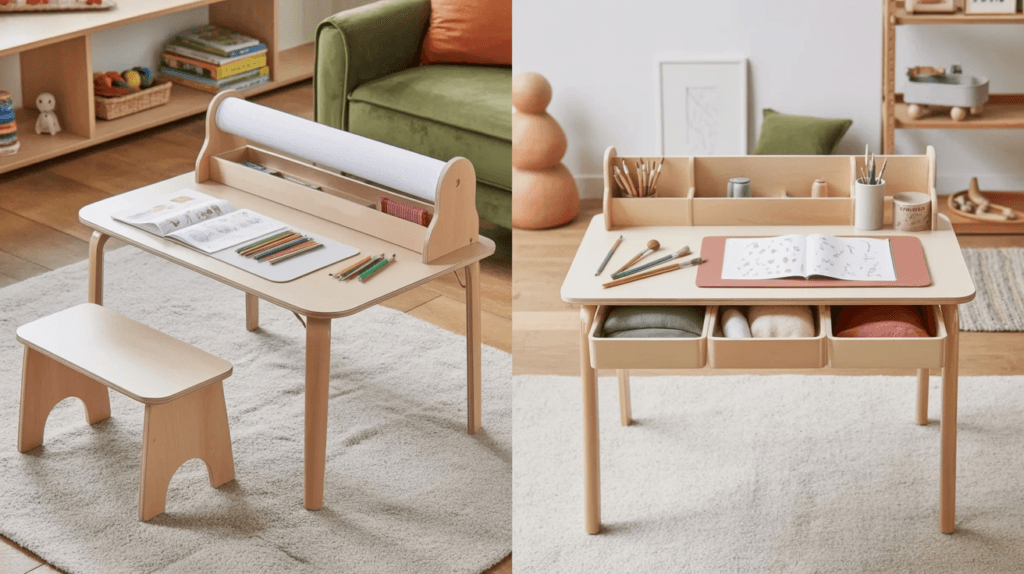
Interactive tables with chalkboards, bins, puzzles, or themed elements encourage learning through play and exploration.
12. Bed Study Table
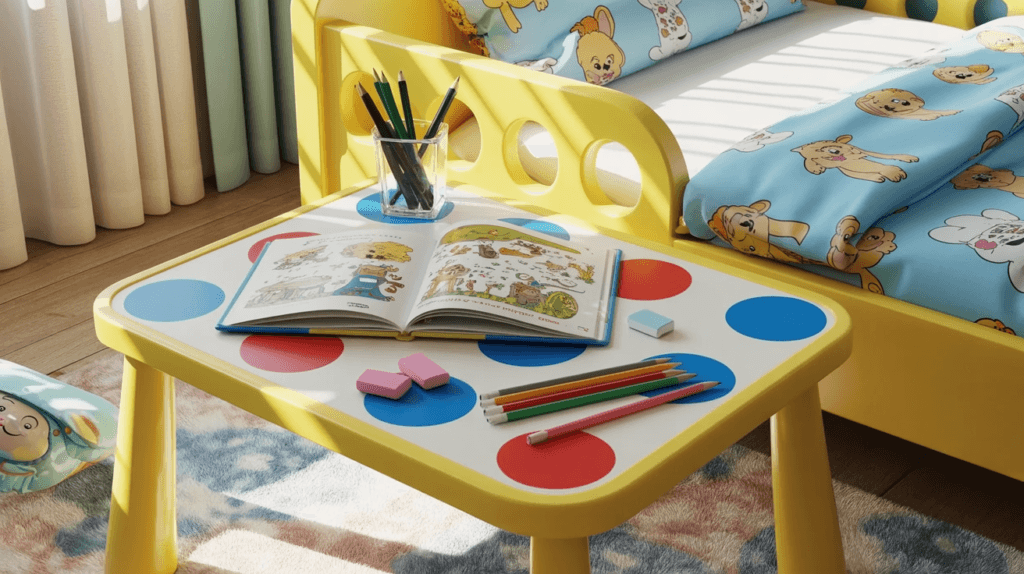
Ideal for reading or homework in bed. Look for stability, adjustable height, lightweight design, and non-slip features for safety.
Final Thought
A well-designed study table for kids creates the perfect balance between discipline and creativity. When paired with good lighting, comfortable seating, and smart storage, it becomes a space where learning feels natural and enjoyable.
If you’re planning your child’s room, choosing the right study table is one of the most impactful decisions you can make.