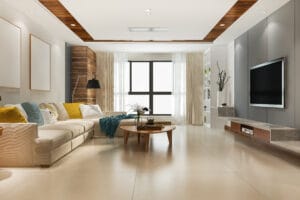
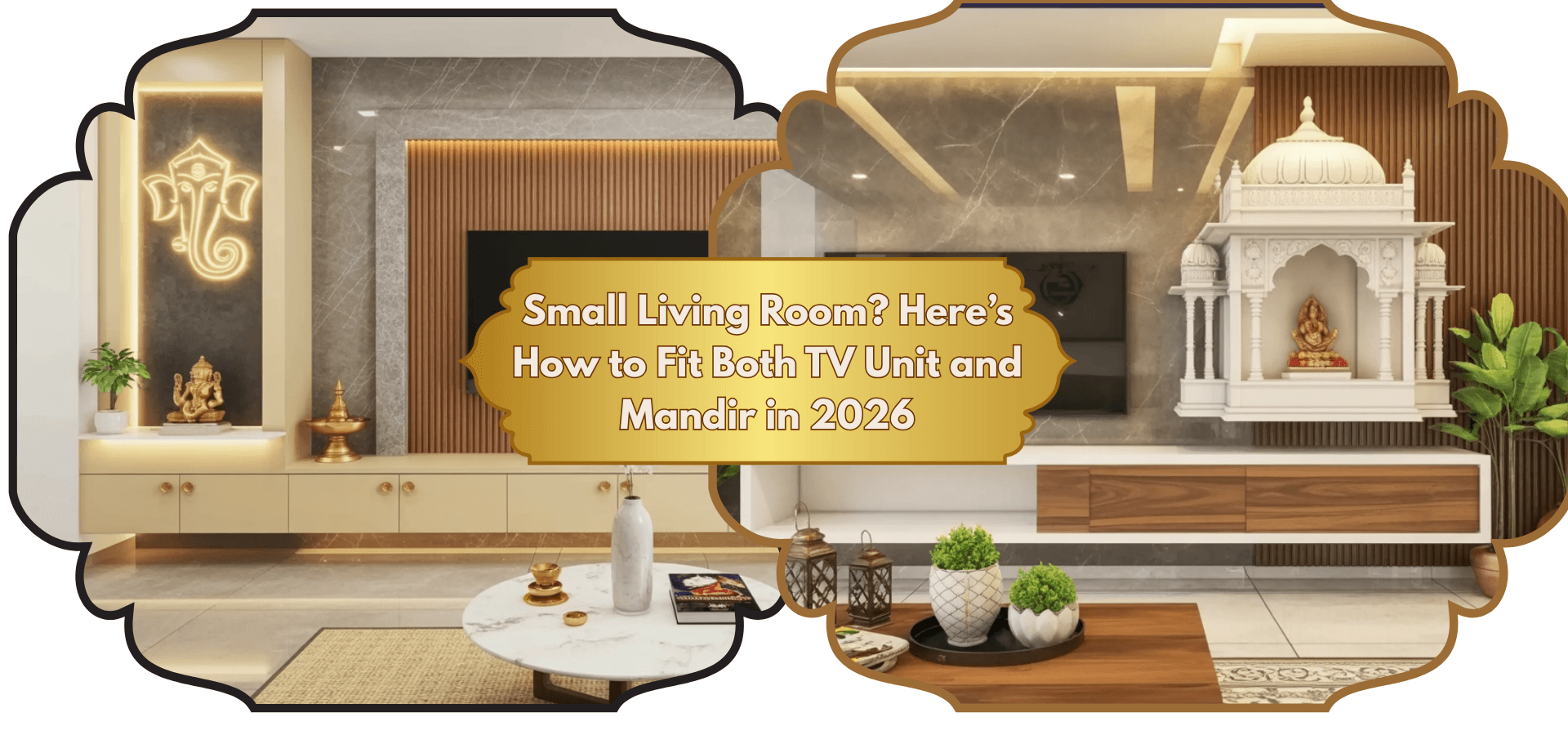
Gone are the days when TVs and mandirs were forced into separate corners of the home. In 2026, Indian living rooms—especially compact apartments—are embracing smart, integrated TV unit with mandir designs that balance modern lifestyles with spiritual needs.
If you live in a 1BHK or 2BHK apartment and feel stuck choosing between a TV unit or a pooja space, this guide will show you how you can thoughtfully include both, without clutter or compromise.
Why TV Unit with Mandir Designs Are Trending in Indian Homes
In today’s apartments, space is limited but expectations are high. Families want:
- A comfortable entertainment zone
- A peaceful pooja space
- A living room that still feels open and uncluttered
A TV unit with mandir solves all three by combining functionality, aesthetics, and spirituality into one cohesive design.
Pro Tip: Integrated designs reduce visual noise and free up wall space compared to separate TV units and pooja cabinets.
What Is a TV Unit with Mandir?
A TV unit with mandir is a multi-functional furniture solution that combines:
- A television and media storage area
- A dedicated pooja space within the same structure
Instead of creating a separate mandir room, the pooja area is smartly integrated using:
- Shutters or doors
- CNC jaali panels
- Material or colour changes
- Lighting differentiation
Real-life scenario:
In a Bengaluru 2BHK apartment, homeowners replaced a bulky TV console and a floor-standing mandir with one wall-mounted TV-mandir unit—instantly making the living room feel larger and calmer.
Key Takeaway:
You save space and maintain spiritual sanctity with a single, well-planned unit.
Where Should the Mandir Be Placed in Relation to the TV?
Respectful placement is essential when combining entertainment and spirituality.
Best placement options include:
- Mandir positioned to one side of the TV
- Mandir placed above a closed cabinet
- Mandir hidden behind shutters when the TV is in use
Avoid placing the mandir directly behind or below the TV screen.
Pro Tip:
Use shutters or jaali doors so the mandir can remain visually separate during TV usage.
Vastu Guidelines for TV Unit with Mandir
If you follow Vastu principles, placement matters just as much as design.
Recommended Vastu practices:
- Place the mandir in the north-east (Ishan) corner
- Idols should face east or west
- The person performing pooja should face east or north
- Avoid placing the mandir:
- Below staircases
- Against bathroom walls
Actionable Insight:
Even within a combined unit, Vastu alignment can be achieved by thoughtful positioning and orientation.
Best Materials for TV Unit with Mandir Designs
The right materials ensure durability, safety, and visual harmony.
Commonly used materials:
- Plywood or engineered wood: Strong base structure
- Laminates & veneers: Clean, modern TV finishes
- CNC-cut MDF: Decorative jaali panels for the mandir
- Marble, quartz, or stone finishes: Elevate the pooja space
Warm LED lighting and subtle metal accents complete the design.
Pro Tip:
Use easy-to-clean laminates near the TV and more tactile, traditional finishes for the mandir area.
3 Best TV Unit with Mandir Styles for 2026
1. Cohesive Modular TV with Mandir Unit
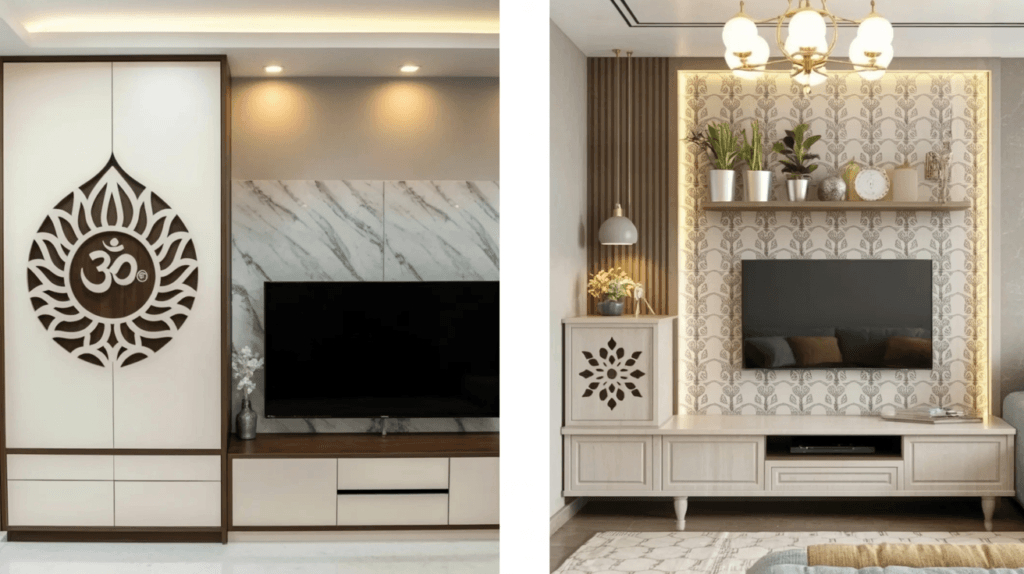
In this design, the TV and mandir visually blend into one seamless structure using complementary materials and colours.
Best for:
- Minimalist homes
- Open-plan living rooms
Why it works:
Creates a calm, unified look without sharp visual breaks.
2. Distinct Mandir with TV Unit
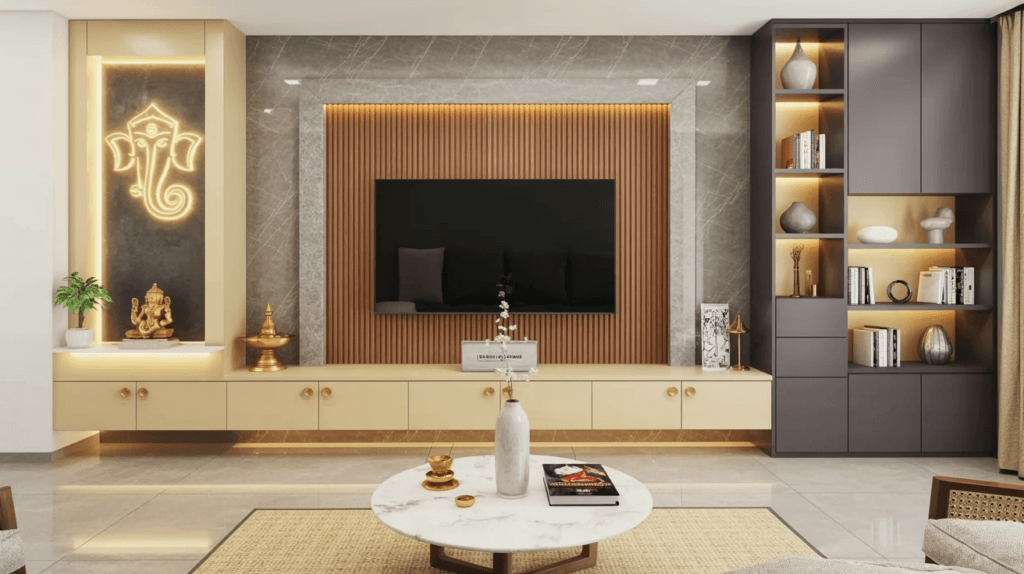
Here, the TV and mandir remain part of the same unit but are subtly separated using:
- Partitions
- Material contrasts
- Slight design variations
Best for:
- Homes that want clear spiritual separation
- Families with frequent pooja rituals
Pro Tip:
A visual boundary helps maintain sanctity without requiring a separate room.
3. Floating TV Unit with Mandir
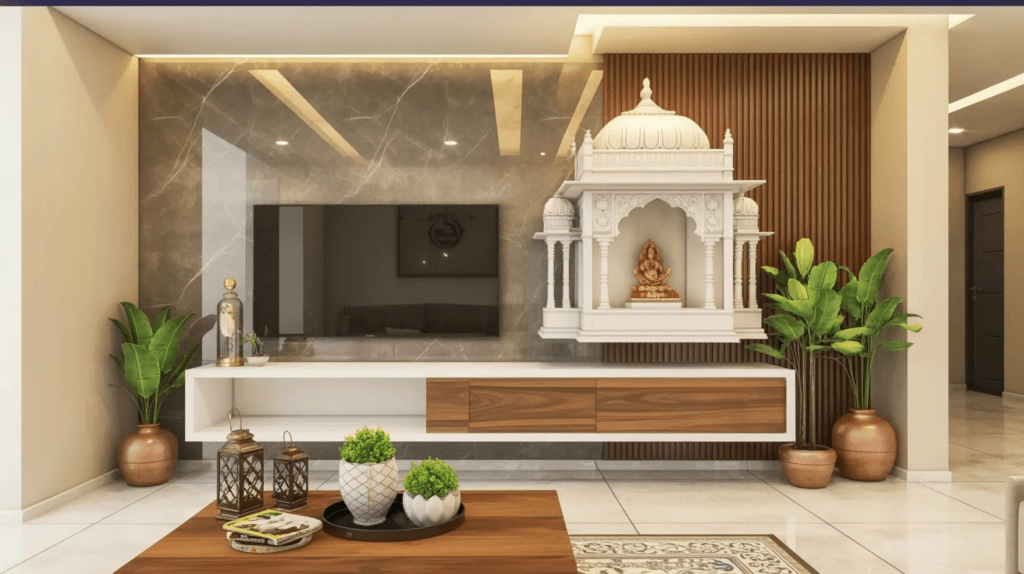
A wall-mounted TV unit with a mandir section above or beside it creates a lighter, more spacious feel.
Best for:
- Small living rooms
- Modern apartments
Why it works:
Floating units free up floor space and make rooms feel less crowded.
What to Consider Before Designing a TV Unit with Mandir
Before finalising your design, ask yourself these questions:
- Does the unit maintain respectful distance between TV and mandir?
- Is lighting appropriate for both zones?
- Is there storage for pooja items and TV accessories?
- Are electrical points planned safely away from diyas?
Safety Tip:
Always use electric diyas instead of open flames near electronic devices.
Popular Materials & Finishes for 2026
Design trends in 2026 favour a balance of modern polish and traditional warmth.
Trending choices include:
- Acrylic or laminate finishes for TV sections
- Natural wood veneers for mandirs
- CNC jaali panels for detailing
- Marble or stone-effect back panels
- Gold, brass, or champagne metal accents
Warm LED lighting enhances both functionality and ambience.
How Much Does a TV Unit with Mandir Cost?
Pricing depends on:
- Unit size and layout
- Material selection
- Design detailing (CNC work, carvings, lighting)
- Hardware quality and installation complexity
Starting price:
A basic MDF TV unit with mandir featuring CNC shutters and laminate finishes typically starts at ₹3,250 per sq. ft.
Pro Tip:
Custom designs cost more but allow better space optimisation and Vastu alignment.
Trending TV Unit with Mandir Designs in 2026
1. Sleek Shuttered Mandir
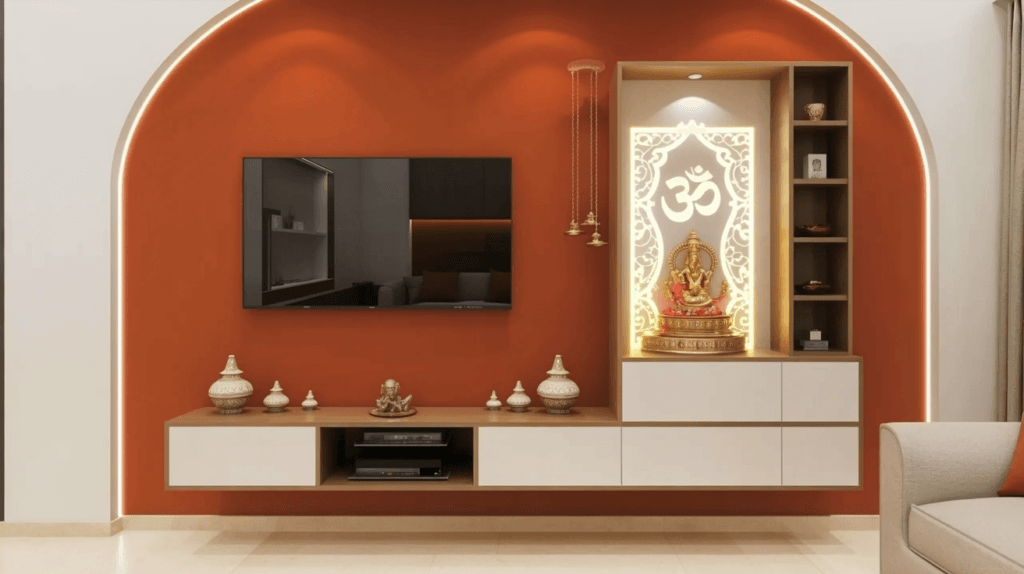
- Clean, minimalist doors
- Mandir hidden when not in use
Perfect for: Clutter-free modern homes
2. Gold Accent Designs
- Subtle gold trims
- Elegant yet understated
Perfect for: Homes that want a festive touch without excess luxury
3. Wooden Carving Details
- Traditional craftsmanship
- Timeless appeal
Perfect for: Homes blending heritage with modern interiors
Most Popular TV Unit Designs With Mandir for Modern Homes (2026 Edition)
When planning a TV unit with an integrated mandir, the key is balance. The unit should offer adequate storage for TV accessories, décor, and pooja essentials—without overpowering the living room. At Wudbell, we recommend using task lighting to gently highlight the mandir and ambient lighting to maintain a calm, welcoming vibe throughout the space.
Let’s explore the most loved and trending designs redefining spiritual-modern living.
#1: The Magic of OM
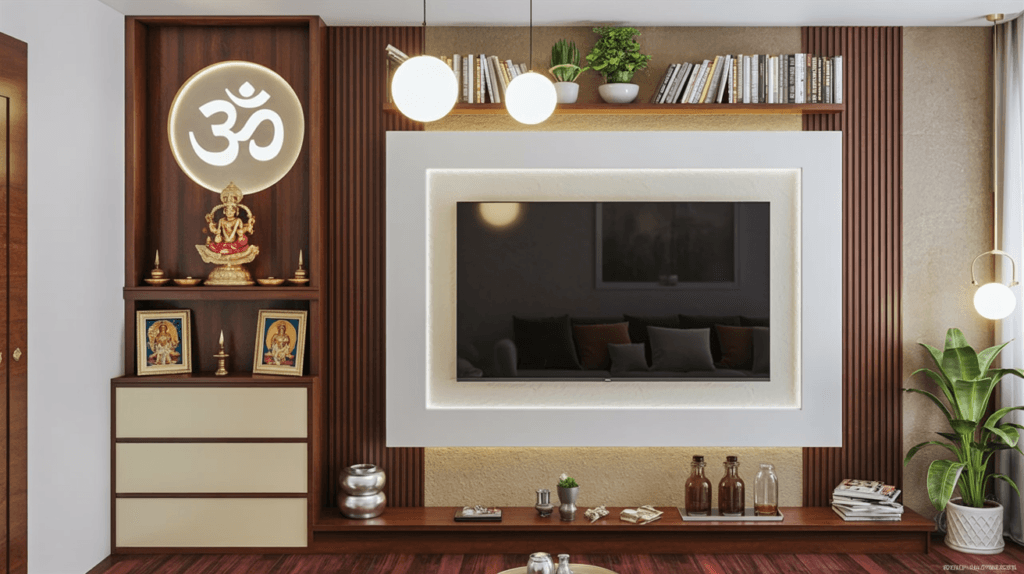
Faith meets finesse
Who says pooja units can’t look chic? One of the most timeless designs is the OM-inspired TV unit with mandir, where CNC-cut OM motifs add a spiritual identity without appearing heavy.
The OM symbol can be:
- Carved into the back panel
- Highlighted above the prayer niche
- Subtly integrated into shutter patterns
This design beautifully bridges devotion and contemporary aesthetics.
Things we 🫶
- Tiny hanging bells that add movement
- Elegant ceiling pendant lights
- Sleek, handle-less drawers
- A calm, understated colour palette
#2: Hanging Bells & Electric Diyas
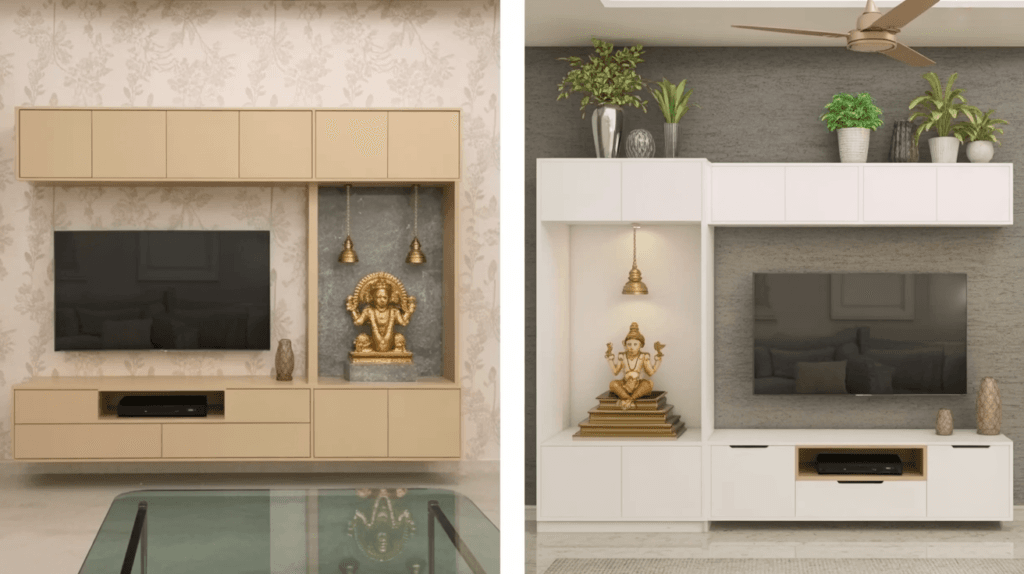
Traditional charm, modern safety
While traditional diyas and bells add character, open flames near electronics aren’t ideal. The modern solution? Electric diyas and illuminated bells, thoughtfully placed at a safe distance from the TV.
This design blends minimal TV unit styling with decorative pooja elements—without visual clutter or safety concerns.
Things we 🫶
- Grained and floral wallpaper textures
- Generous concealed storage
- Overhead display shelves for décor
#3: The Attached Shelf Concept
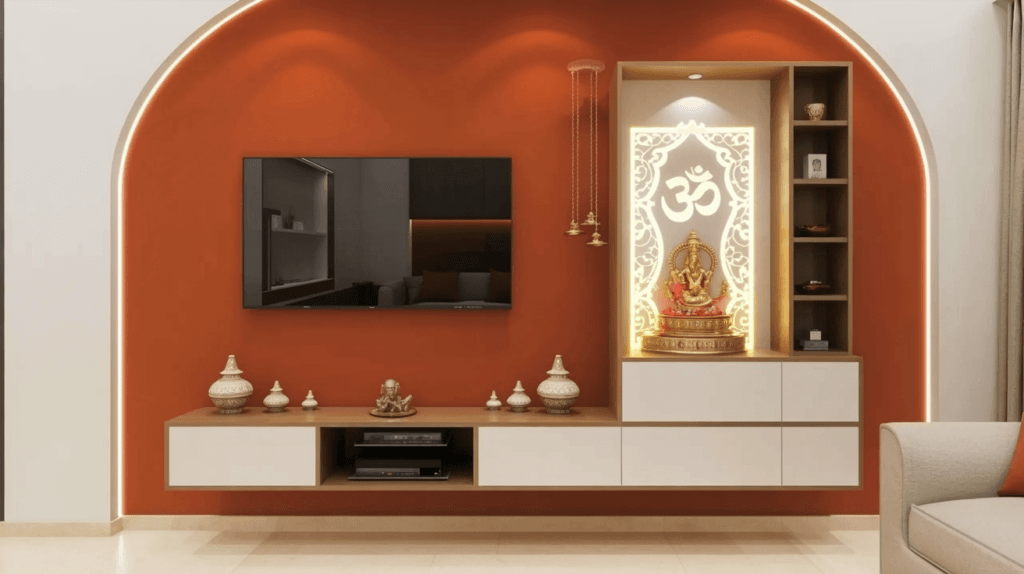
Together, yet thoughtfully apart
This design keeps the pooja and TV areas visually connected yet spiritually distinct. Partitions, shelves, or slim dividers create a respectful separation while maintaining design continuity.
Perfect for homeowners who want clarity of purpose without building separate units.
Things we 🫶
- OM carvings on back and side panels
- Warm accent arches behind the TV
- Overhead cabinets and closed pooja storage
#4: The Ganesha Carving
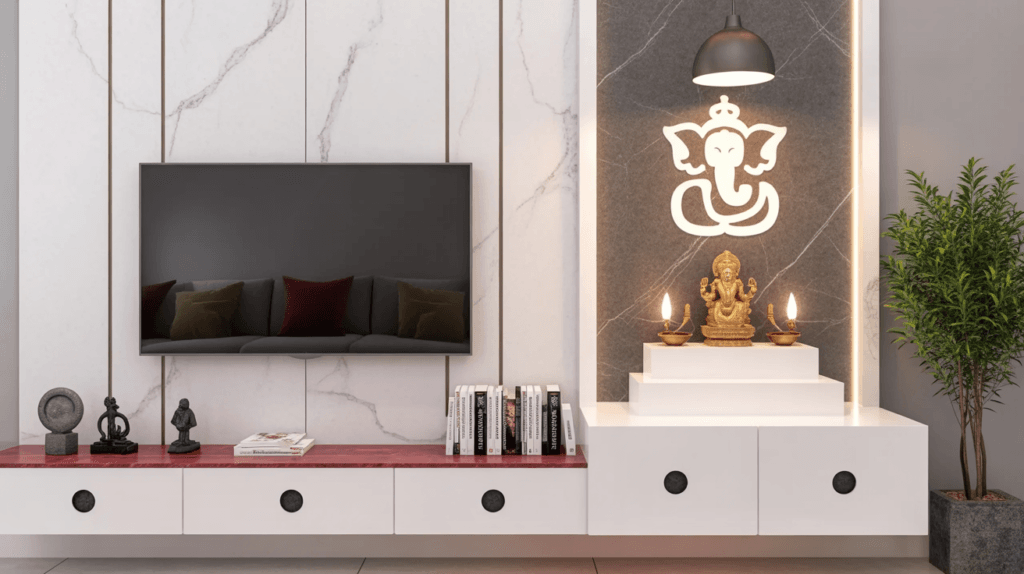
God truly is in the details
Instead of generic motifs, this design features Lord Ganesha carvings placed thoughtfully:
- On the mandir back panel
- Along the top shelf
- Integrated into shutter designs
Soft backlighting highlights the carving while maintaining a respectful visual hierarchy above the TV.
Things we 🫶
- Detailed Ganesha carving
- Soft, warm backlighting
- Subtle golden trims
- Elegant ceiling pendant lights
#5: Marble Panel Separation
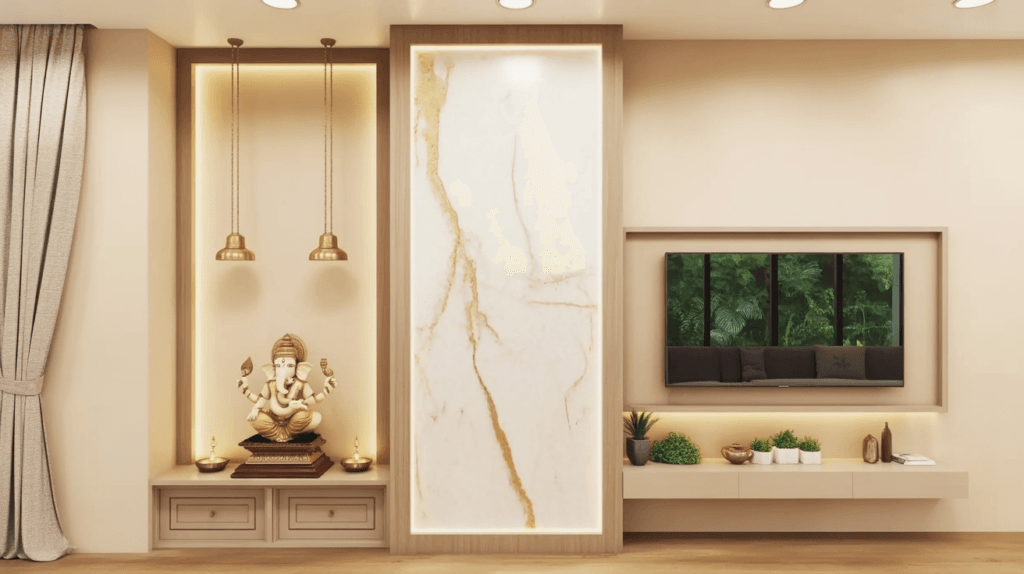
One unit, two worlds
Who needs a separate prayer room when design does the work? This layout uses a marble panel divider to visually separate the mandir from the TV unit—while keeping both within a single architectural feature.
Choose marble with soft veining or light colour streaks to add elegance without heaviness. Under-panel lighting makes the mandir glow subtly.
Things we 🫶
- Statement marble divider
- Curved laminated panels
- LED strip lighting
- Elevated display shelves
#6: The Neutral Colour Palette
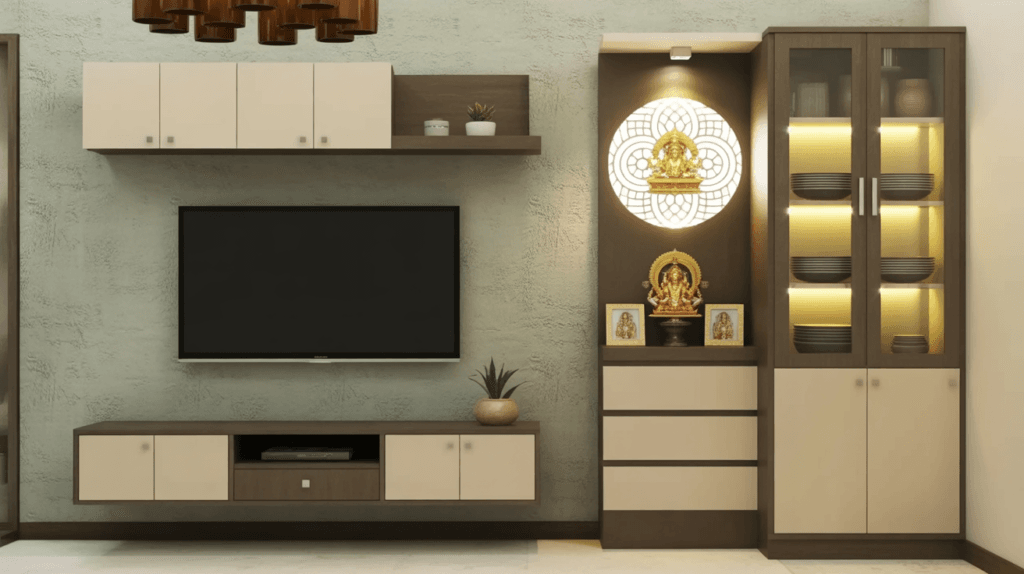
Let devotion take centre stage
Neutral shades like beige, greige, and soft browns allow the mandir to stand out naturally. A jaali OM design with warm backlighting adds a divine glow without overpowering the space.
This design is ideal for modern homes that prefer calm, timeless interiors.
Things we 🫶
- Statement chandelier
- Textured neutral wallpaper
- Backlit jaali OM panel
- Under-cabinet LED strips
- A kalasha crowning the unit
Why Choose Wudbell for TV Units With Mandir?
At Wudbell, every TV-mandir unit is designed with:
- Spiritual sensitivity
- Modern aesthetics
- Practical storage planning
- Long-lasting materials
- Custom lighting solutions
Because your living room deserves a space where faith, family, and functionality coexist beautifully.